Best Community Colleges in Alaska 2026
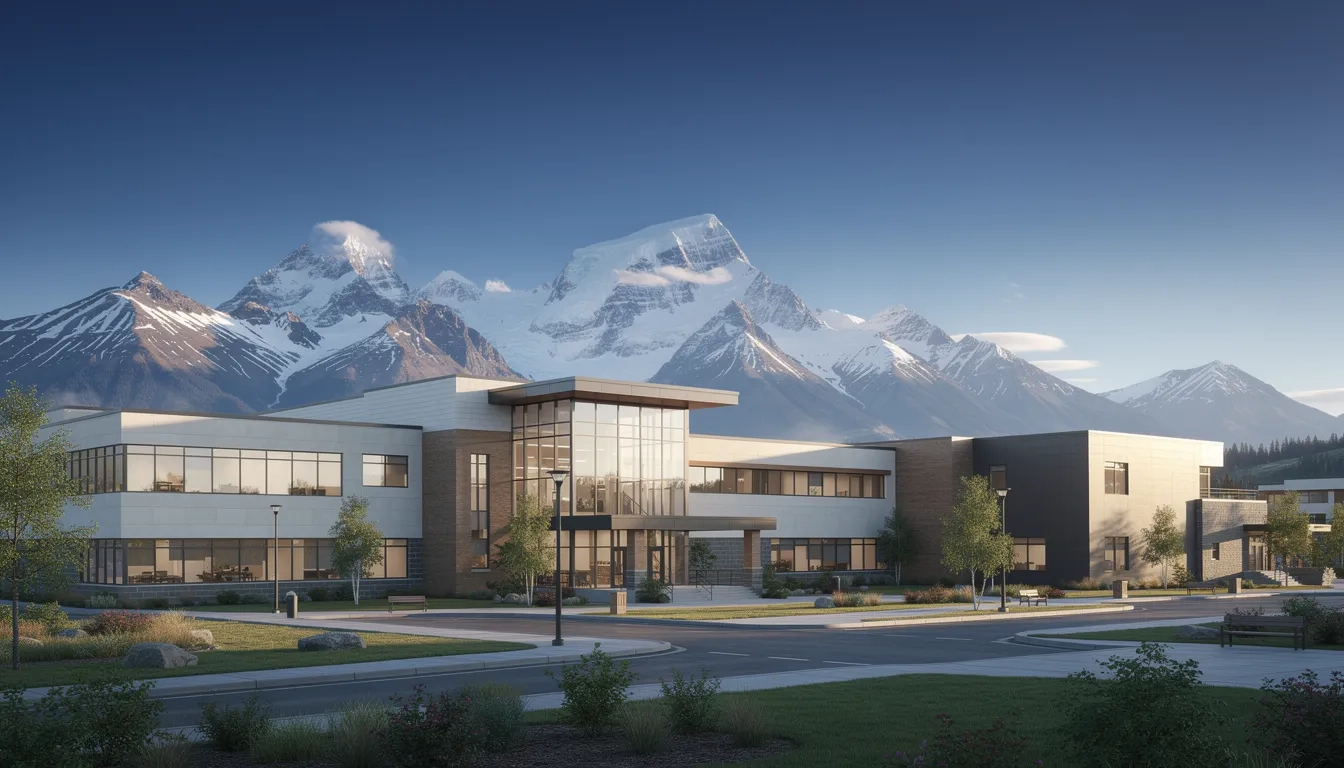
Best Community Colleges in Alaska 2026
If you've spent any time Googling "community colleges in Alaska," you've probably noticed something strange: the list never quite adds up the way it does for, say, California or Texas. That's not a research failure on your part. Alaska genuinely doesn't have a standalone community college system with its own governing board and its own name-brand campuses. What it has instead is arguably more interesting, and for a lot of Alaskans, more useful — a network of smaller, regional campuses folded directly into the University of Alaska system, plus a couple of standout standalone options that punch way above their size.
This guide breaks down exactly what "two-year college" means in Alaska in 2026, what it actually costs, which programs make sense for which career goals, and how credits move from a small-town campus into a full bachelor's degree in Anchorage or Fairbanks.
Why Alaska Doesn't Have a "Community College System" — And What It Has Instead
Most states built their two-year colleges as a separate tier: community college districts, their own accreditation, their own boards, sometimes their own state agency. Alaska took a different route. When the state consolidated its higher-ed footprint decades ago, it folded what used to be independent community colleges directly into the University of Alaska system — mainly under University of Alaska Anchorage (UAA) and University of Alaska Fairbanks (UAF). The result is a set of "community campuses" and "rural campuses" that function exactly like community colleges — open enrollment, associate degrees, certificates, low tuition, local commuting distance — but that are legally and administratively part of a four-year university.
Practically, that structure has one huge advantage: because your associate degree is earned through UAA or UAF rather than a separate institution, transferring into that same university's bachelor's programs is usually a matter of continuing your enrollment, not reapplying somewhere new.
Here's the real map of Alaska's two-year options:
Under UAA (Southcentral Alaska):
- Kenai Peninsula College (KPC) — campuses in Soldotna (Kenai River Campus) and Homer (Kachemak Bay Campus), with extension sites in Seward
- Kodiak College — on Kodiak Island, about 250 miles south of Anchorage
- Matanuska-Susitna College (Mat-Su College) — in Palmer, serving the fast-growing Mat-Su Valley
- Prince William Sound College (PWSC) — based in Valdez, with centers in Cordova and the Copper River Basin
Under UAF (Fairbanks, Interior, and rural Alaska):
- UAF Community and Technical College (CTC) — the Fairbanks-based, in-town two-year college
- Interior Alaska Campus — serving rural Interior communities around Fairbanks
- Bristol Bay Campus (Dillingham) — covering Bristol Bay, the Aleutians, and the Pribilofs
- Chukchi Campus (Kotzebue) — north of the Arctic Circle, serving the Northwest Arctic
- Kuskokwim Campus (Bethel) — serving the Yukon-Kuskokwim Delta
- Northwest Campus (Nome) — serving the Bering Strait region
Under University of Alaska Southeast (UAS):
- Ketchikan Campus — originally chartered as Ketchikan Community College back in 1954
- Sitka Campus — strong in fisheries and health programs
Standalone, non-UA options:
- AVTEC (Alaska's Institute of Technology), in Seward — the state-run vocational-technical center
- Iḷisaġvik College, in Utqiaġvik — Alaska's only tribal college, and the northernmost accredited college in the United States
That's a dozen-plus real, physical two-year options spread across a state four times the size of California, each tuned to the economy of its own region.
Tuition: What You'll Actually Pay
Because most of Alaska's community campuses are part of UAA or UAF rather than separate institutions, tuition is set by the University of Alaska system as a whole, not campus by campus. For the 2025–2026 academic year, resident tuition for lower-division coursework (the classes that make up an associate degree) runs $241 per credit hour, rising to $290 per credit hour for upper-division work once you're deep into a bachelor's track. Nonresidents pay considerably more — $841 per credit hour at the lower-division level. A full-time resident student taking 15 credits a semester is looking at roughly $3,600 per semester in tuition alone before fees, which is genuinely affordable by national standards, especially with Alaska's total lack of state income tax and the state's Permanent Fund Dividend helping offset costs for residents.
At AVTEC in Seward, pricing works differently because programs are short and intensive rather than semester-based — figure roughly $3,000 to $6,000+ depending on the program and its length (most run 90 to 180 days). At Iḷisaġvik College, total estimated tuition and fees run around $5,260 a year, and — notably — the college charges Alaska residents and out-of-state students the identical rate. Iḷisaġvik also offers tuition waivers for Alaska Natives, American Indians, Elders, and North Slope Borough residents, which can make it functionally free for a large share of its eligible students.
On top of any of these, the Alaska Performance Scholarship is worth checking if you graduated from an Alaska high school with a reasonably rigorous course load — awards range up to roughly $4,755 a year and can be used at UA campuses or approved career and technical programs, including part-time study.
What You Can Actually Study — And Why It Maps to Alaska's Economy
This is where Alaska's two-year colleges genuinely differ from a generic community college in the Lower 48. Nearly every campus is built around the industry that dominates its region, which means the programs are unusually practical.
Fisheries, maritime, and marine trades. This is Alaska's signature strength. Kenai Peninsula College's Kachemak Bay Campus in Homer partners with UAS Sitka to offer Fisheries Technology at three levels — a 14-credit occupational endorsement, a 32-credit certificate, or a full 60-credit AAS degree — with tracks in fisheries management or Alaska salmon enhancement. Kodiak College and Prince William Sound College both offer an Occupational Endorsement Certificate in Marine Services Technology, training students to service boat engines, electrical systems, drivetrains, and hulls — real, hands-on technician work for a state whose economy runs on boats. PWSC also runs required Fishing Vessel Response training tied to the Valdez oil terminal, and as of the 2025–2026 push, PWSC has continued a free tuition and housing initiative (funded through federal pandemic-recovery and Perkins grant money) for its Natural Resources Technician, Marine Natural Resources Technician, and Marine Service Technology programs — each a single 16-credit semester, normally worth $3,744 in tuition alone plus roughly $3,400 in housing per term.
Oil, gas, and process technology. Kenai Peninsula College offers a well-established AAS in Process Technology, training operators for oil and gas, mining, food and beverage, water treatment, and chemical processing facilities — a direct pipeline into Kenai Peninsula's refinery and platform economy. UAF's Community and Technical College in Fairbanks offers parallel process technology tracks aimed at the Interior's mining and oil-field sectors.
Construction trades and welding. UAF CTC offers an entry-level welding occupational endorsement plus more than 50 certificate and degree programs spanning construction management, automotive, diesel and heavy equipment, and aviation maintenance. UAS Sitka offers Construction and Welding Technologies. AVTEC in Seward specializes almost entirely in trades — welding, diesel mechanics, and HVAC/refrigeration are among its most popular programs, run as intensive multi-month blocks rather than semester-long classes, which suits people who want to get into the workforce fast.
Healthcare. Given that Alaska's health care industry needs an estimated 9,400-plus new workers every year and the state currently trains only a fraction of the registered nurses it needs annually, healthcare training is one of the most valuable things a two-year Alaska campus can offer. Mat-Su College in Palmer is a genuine standout here: it offers the AAS in Nursing and hosts UAA School of Nursing coursework in a simulation facility built to look like a real hospital ward, ICU, and clinic. Admission into the full nursing major is competitive and requires a separate application through NursingCAS even after you're admitted to UAA generally, so plan on applying early and keeping your GPA strong through prerequisites. Ketchikan and Sitka offer allied health, medical assisting, and pre-nursing coursework, and Iḷisaġvik offers an AS in Allied Health.
Everything else. Business, information technology, human services, early childhood education, paralegal studies, criminal justice, and general liberal arts transfer tracks are available at essentially every campus listed above, since these are the courses that build toward general education requirements for any UA bachelor's degree.
The Common Misconception: "Alaska Doesn't Have Real Affordable College Options"
Because Alaska doesn't show up on the "best community colleges" listicles that dominate search results — those lists are almost always built around states with a formal community college district — a lot of people conclude the state simply doesn't have this tier of education. That's wrong, and it's an expensive assumption if it pushes someone toward a costly out-of-state trade school instead.
The reality is that Alaska's version of a community college is just organized differently and, in some ways, better integrated. Because your associate degree at Kenai Peninsula College or Mat-Su College is technically a UAA degree, and your Kuskokwim or Northwest Campus credits are technically UAF credits, transferring into a bachelor's program doesn't require a separate transfer application, a credit evaluation from an outside registrar, or hoping an articulation agreement exists. You're already enrolled in the university system; you're just changing which building — or which online modality — you take classes through. The other misconception worth killing: that AVTEC and Iḷisaġvik are somehow lesser or less "real" than a university-affiliated campus. AVTEC is the state's official vocational-technical institute with direct industry placement pipelines, and Iḷisaġvik is a fully accredited, federally recognized tribal land-grant college — both are legitimate, respected credentials in Alaska's job market, particularly in the trades and on the North Slope.
How to Choose: Matching a Campus to Your Region and Career Goal
If you're on the Kenai Peninsula and want oil/gas, process work, or fisheries: Kenai Peninsula College is the obvious anchor, with real depth in both Process Technology and Fisheries Technology.
If you're in the Mat-Su Valley and want healthcare or a straightforward transfer path to a bachelor's degree: Mat-Su College's nursing simulation lab and its close, seamless pipeline into UAA main campus make it the strongest choice for that track.
If you're anywhere near Prince William Sound and want maritime, marine trades, or natural resources work: Prince William Sound College, especially while its free-tuition initiative for Natural Resources Technician, Marine Natural Resources Technician, and Marine Service Technology continues — check current-year eligibility, since grant-funded programs like this can change year to year.
If you're on Kodiak Island and fisheries or marine services is the goal: Kodiak College's Marine Services Technology OEC and its partnerships with the Kodiak Seafood and Marine Science Center are purpose-built for exactly that.
If you're in Fairbanks or the Interior and want trades, welding, or a broad menu of technical certificates: UAF's Community and Technical College, with 50-plus programs across 30 fields, is the largest and most diverse single option in the state.
If you live in rural Southwest, Northwest, or Interior Alaska: UAF's rural campuses — Bristol Bay, Chukchi, Kuskokwim, Northwest, and Interior Alaska Campus — exist specifically so you don't have to relocate to Fairbanks or Anchorage for your first two years, and many courses are delivered by distance so you can start from your home community.
If you're in Southeast Alaska: UAS's Ketchikan campus leans toward business, liberal arts, and tourism management; Sitka leans toward fisheries, health, and construction/welding.
If you want the fastest possible route into a skilled trade, regardless of region: AVTEC's short, intensive certificate programs in welding, diesel mechanics, and maritime training are designed to get you job-ready in months, not years — worth strong consideration if a full associate degree isn't your goal.
If you're Alaska Native, American Indian, or a North Slope Borough resident: Iḷisaġvik's tuition waivers can make a genuine two-year or certificate credential essentially free — worth exploring before assuming cost is a barrier.
FAQ
Does Alaska have real community colleges, or just university extension sites? Both, depending on how you define it. Legally, most of Alaska's two-year campuses are divisions of UAA, UAF, or UAS rather than independently chartered community colleges. Functionally, they operate exactly like community colleges — open enrollment, associate degrees, certificates, low tuition, and strong local ties. AVTEC and Iḷisaġvik College are the two genuinely standalone, non-university options.
What's the cheapest way to get an associate degree in Alaska? For residents, in-state tuition through any UA community campus runs $241 per lower-division credit hour for 2025–2026, meaning a 60-credit AAS degree costs roughly $14,500 in tuition before scholarships, grants, or the Alaska Performance Scholarship — which can knock several thousand dollars a year off that total for eligible graduates.
Can I transfer my associate degree into a bachelor's program without losing credits? Generally yes, if you stay within the University of Alaska system. Because campuses like Kenai Peninsula College and Mat-Su College are part of UAA, and Bristol Bay, Chukchi, Kuskokwim, and Northwest campuses are part of UAF, general education credit typically transfers directly, and some pathways — like the Associate of Arts to Bachelor of Arts in Elementary Education with UAF — have formal articulation agreements built specifically to make the switch seamless.
Is AVTEC a community college? Not technically — AVTEC is Alaska's state-run vocational-technical institute, separate from the University of Alaska system. It doesn't grant associate degrees; instead it offers short, intensive certificate programs (often 90–180 days) in fields like welding, diesel mechanics, HVAC, and maritime training through its Alaska Maritime Training Center.
What is Iḷisaġvik College, and who can attend? Iḷisaġvik is Alaska's only tribal college, located in Utqiaġvik, and it's open to any student, not just Alaska Native or American Indian applicants — though those students, along with North Slope Borough residents, are eligible for tuition waivers. It offers associate degrees and certificates in fields including accounting, allied health, business management, health management, information technology, and emergency services.
Which Alaska two-year programs lead to the best job prospects right now? Healthcare and the maritime/fisheries trades are especially strong going into 2026. Alaska's health care sector needs an estimated 9,400+ new workers annually and trains far fewer registered nurses than it needs each year, which keeps demand — and often starting pay — high for nursing and allied health graduates. Fisheries technology, marine services, and process technology programs also feed directly into some of the state's highest-paying blue-collar sectors, particularly for graduates willing to work in or near the region where they trained.
Sources
- Campuses | About UAA | University of Alaska Anchorage
- Kenai Peninsula College
- Process Technology | Kenai Peninsula College
- Fisheries Technology | Kenai Peninsula College
- OEC in Marine Services Technology | Kodiak College
- Nursing | Mat-Su College
- Transferring into SON | School of Nursing | UAA
- Occupational Endorsement Certificate in Marine Services Technology | Prince William Sound College
- Prince William Sound College continues free tuition, housing initiative for natural resources and marine tech programs | The Cordova Times
- Our Rural Campuses | UAF College of Indigenous Studies
- UAF Community & Technical College
- Welding Occupational Endorsement | UAF CTC
- Campuses | Catalog | University of Alaska Southeast
- Ketchikan Degrees and Certificates | University of Alaska Southeast
- Programs | AVTEC
- Iḷisaġvik College
- Cost of Attendance | Iḷisaġvik College
- Tuition and Fees 2025-2026 Tuition Summary | UAA Catalog
- Alaska Performance Scholarship (APS) | Alaska Commission on Postsecondary Education
- Alaska health care industry needs more than 9,400 new workers each year, report says | Alaska Beacon

