Early College High School: What It Actually Gets You
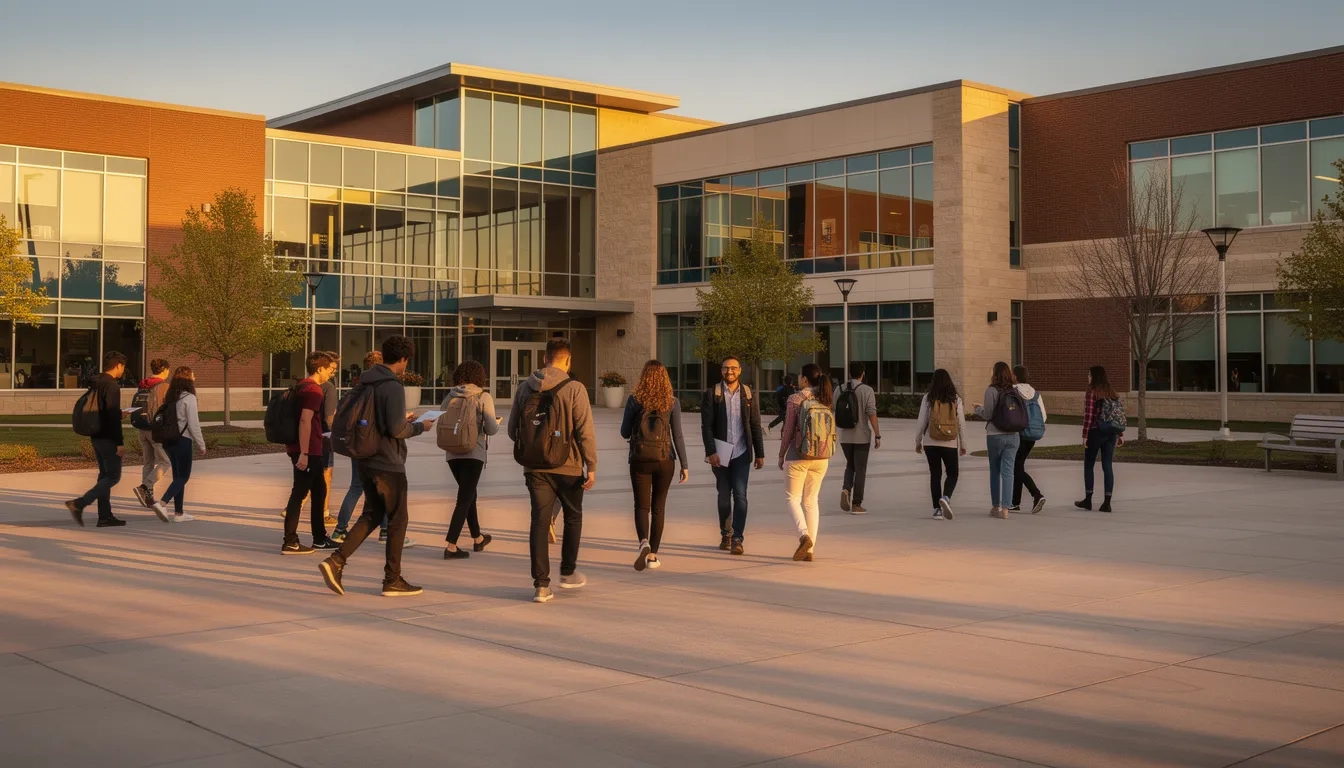
A sixteen-year-old in Lawrence, Massachusetts walks into junior year already carrying college credits most freshmen don't have. By the time she graduates high school, she might hold an associate degree too, tuition already covered. That's not a scholarship fluke.
It's the entire point of Early College High School, a model that quietly shaped how thousands of teenagers spent their high school years. Researchers at the American Institutes for Research tracked a national cohort of these students and found the effects held up years later.
What an Early College High School Actually Is
Forget the name for a second. It's not "regular high school, but you also apply to college early." An Early College High School (ECHS) is its own school, usually small, built from the ground up around a partnership with a specific community college or university.
Students typically enroll starting in ninth grade and spend all four years working toward two credentials at once: a high school diploma, and often an associate degree. The model traces back to 2002, when the Bill and Melinda Gates Foundation funded a national push through the nonprofit Jobs for the Future.
The goal was blunt: get low-income and first-generation students into college classrooms years earlier than usual.
Tuition and books are covered by the school-college partnership, not the family. That's the detail that surprises most parents first.
Early college is not a fancier label for AP classes. It's a four-year school built around one goal: get you a meaningful chunk of college finished before you're done being a teenager.
North Carolina's early college network puts students on an actual community college campus, sitting in classes next to adults twice their age. CUNY runs its early college schools the same way in New York City, and their graduates earn an average of 24.8 college credits by the time they walk the stage.
It works for a lot of kids. It's also not built for every kid, which is where things get interesting.
How This Actually Differs From AP and Dual Enrollment
People use "AP," "dual enrollment," and "early college" like they mean the same thing. They don't, and mixing them up costs families real money and real time later.
AP classes are taught inside your regular high school, by your regular teachers, using a College Board curriculum. Credit lives or dies by one exam score every May, and the exam itself runs $99 (College Board's 2025-26 fee schedule), regardless of what grade you earned in the actual class.
Dual enrollment means taking a real college course for a real college grade, usually while still attending an ordinary, full-size high school. You might do it for one class junior year or a full load senior year, and that flexibility cuts both ways, since advising quality varies wildly by district.
Early college is dual enrollment's more organized older sibling: same core idea, real courses, real transcripts, but wrapped inside a four-year school built for exactly this, with counselors whose entire job is keeping you from falling through the cracks.
Side by Side
| Early College High School | AP Classes | Dual Enrollment | Traditional High School | |
|---|---|---|---|---|
| Cost to family | Free (tuition and books covered by district-college partnership) | Free classes; $99 per exam, reduced to about $53 for eligible students | Often free to low-cost; some districts charge per credit hour | Free |
| Credits earned | Up to 60 credits or a full associate degree; CUNY grads average 24.8 credits | 3-8 credits per exam passed, and only if the college accepts the score | Grade-based, roughly 3-4 credits per course, no cap on total but rarely coordinated into a degree | None |
| Typical outcome | 80% enroll in college vs. 71% of similar peers, per AIR's long-running study | Roughly 60-75% of exams nationally score a 3 or higher | Highly dependent on the school; support is inconsistent | Diploma only |
The pattern underneath the table: early college trades flexibility for structure. AP gives you the most choice and the least hand-holding, early college gives you the least choice and the most support, and dual enrollment sits in between. Which end of that spectrum fits your kid says more than any brochure will.
Who Early College Actually Fits
This is where a lot of families get it wrong. Early college was not designed for the kid who's already acing five AP classes and gunning for an Ivy League seat. It was built, quite deliberately, for students who might not otherwise picture themselves finishing college at all.
The AIR evaluation of the original Early College High School Initiative found something worth sitting with: the boost in degree completion was largest for female, minority, and lower-income students, not smaller. That's the opposite of how most "advanced" programs work.
Good fits
- A student who's solid academically but not necessarily thriving in a big, impersonal high school
- A first-generation college family that wants cost and complexity taken off the table early
- A kid who already knows, roughly, the field they want (nursing, IT, education) and can use an associate degree as a running start
- Someone who does better with a small, tight-knit cohort than with 2,000 classmates
Weaker fits
- A student chasing the most selective four-year admissions possible, where a packed AP/honors transcript often reads better to admissions offices
- A kid who genuinely doesn't know what they want yet and would rather sample widely
- A student who'd miss the traditional high school experience: big sports programs, a large marching band, a sprawling club scene
Ask three questions before applying: does my kid want fewer choices in exchange for more support? Would they rather be one of the more advanced students at a small early college campus, or a strong student in a stacked class of 500 at a traditional public high school? And can they handle college-level pace at fourteen or fifteen, not eighteen?
The Tradeoffs Nobody Puts in the Brochure
Every early college pamphlet leads with the free-college-credit pitch. Fair enough, it's the headline. But the fine print matters more than most families realize going in.
The traditional high school experience mostly disappears. Football under the lights, a 40-person cast fall play, homecoming with a packed gym — early college campuses are often small and share space with adults, so those things shrink or vanish. Some kids don't miss it. Others miss it badly.
The pace is real college pace, at an age when most brains and time-management skills are still catching up. A common misconception is that early college is just "AP classes with extra steps." It isn't — a college professor grading a fifteen-year-old's essay applies the exact same standard they'd apply to a twenty-year-old, no curve for age.
There's also a structural risk that gets glossed over: cohort rigidity. Because the whole model depends on a tight partnership with one college, switching your mind about a major, or moving districts mid-program, can unravel the carefully sequenced plan fast.
Nancy Hoffman, a senior advisor who has studied Massachusetts early college programs for Jobs for the Future, has written that success depends on a well-staffed, collaborative team catching problems early. A poorly resourced program can leave a struggling student stranded with no such team behind them.
How to Find One and Actually Get In
Early college high schools aren't hiding, but they also aren't handed out through the regular high school lottery in most places. You have to go looking, and the biggest mistake families make is starting the search in tenth grade instead of eighth, since most programs are structured as a four-year commitment from day one.
- Start with your state education department's website. Texas, North Carolina, Massachusetts, Colorado, and Indiana all publish public directories of approved early college campuses.
- Ask your district's counseling office directly whether a local community college partners with any nearby school, even if it's not branded "early college" on the sign out front.
- Check eligibility early, ideally in eighth grade. Most programs want a cumulative GPA around 2.75 to 3.0, completed pre-algebra or algebra coursework, and a placement test or teacher recommendation.
- Apply on time. Deadlines tend to land in winter for the following fall (December is common), and late applications often just roll to a waitlist.
- Ask about the wraparound supports before enrolling: tutoring, dedicated advisors, transportation to the college campus. A program without these is just dual enrollment wearing a costume.
What Happens to Those Credits at a Four-Year College
Here's the part that catches families off guard after all the celebrating is done. Not every credit survives contact with a four-year university.
The Government Accountability Office has estimated that roughly 43% of credits get lost somewhere in a transfer, and four-year schools commonly cap total transferable credits between 60 and 90 for a bachelor's degree. A D or an F almost never transfers, no matter where it was earned.
The good news: early college credit generally transfers better than loose, unaffiliated dual enrollment credit. That's because early college programs are built around a formal articulation agreement with a named destination college from day one.
Loose dual enrollment credits, collected without a specific four-year target in mind, are the ones most likely to land as stray electives that don't count toward a major.
Two things to do before senior year ends:
- Get the exact articulation agreement in writing and check whether the target four-year school is the same one the student plans to actually attend
- Sit down with a transfer advisor at that four-year school, not just the community college partner, since fewer than half of dual enrollment students nationally ever talk to one
Bottom Line
Early college high school is a real, tuition-free path to a running start on a degree, and the research backs it up: better high school graduation rates, better college enrollment rates, and for lower-income and first-generation students specifically, a meaningfully bigger shot at finishing a degree at all.
- If your student wants structure, a smaller community, and a head start toward a specific field, look for a program near you through your state education department's list.
- If your student is chasing the most competitive four-year admissions and thrives on variety, a traditional high school with a strong AP lineup may serve them better.
- Before enrolling anywhere, get the articulation agreement in writing and confirm it actually points toward the four-year school your family has in mind.
- Don't assume every credit survives the jump to a bachelor's degree. Check, don't guess.
Frequently Asked Questions
Is early college high school the same thing as taking AP classes?
No, and this is the most common mix-up. AP classes are single courses taught at a regular high school where credit depends on one exam score, while early college is an entire four-year school built around a formal partnership with a college, often leading to an associate degree.
How do I actually apply to an early college high school?
Check your state department of education's site for an approved list, then contact your current school counselor about local partnerships. Most programs require an application, a GPA around 2.75 or higher, a placement test, and submission by winter for the following fall.
Will my early college credits transfer to any four-year school I choose?
Not automatically. Credits transfer most reliably to the specific four-year college named in the program's articulation agreement, and roughly 43% of transfer credits nationally get lost somewhere along the way when students move to a different institution than planned.
Does early college hurt my chances at a selective four-year college?
It depends on the student. Selective admissions offices generally respect a strong early college transcript, but a student aiming for the most competitive schools sometimes benefits more from a packed AP and honors course load at a traditional high school, since it showcases breadth differently.
Is early college really free?
Yes, in the model as designed. Tuition, and usually textbooks, are covered through the school-college partnership rather than billed to the family, which is different from some dual enrollment setups where districts pass along a per-credit-hour fee.
What if there's no early college high school near me?
Ask your district about dual enrollment partnerships instead, since many communities without a formal early college campus still offer some version of the courses through a local community college. It won't come with the same wraparound advising, so lean on your school counselor more.
Sources
- Students in Early College High School Initiative Significantly More Likely to Go to College and Earn a Degree
- Early College High School Is Changing Students' Lives and Futures in Lawrence, MA
- New Department of Elementary and Secondary Data Shows Early College Is Steering More Students Towards Higher Education
- What's the Difference Between AP, Dual Enrollment and Early College?
- What Happens to Dual Enrollment Credits After High School?
- AP Program Results: Class of 2025

