How to Become a Welder in 2026
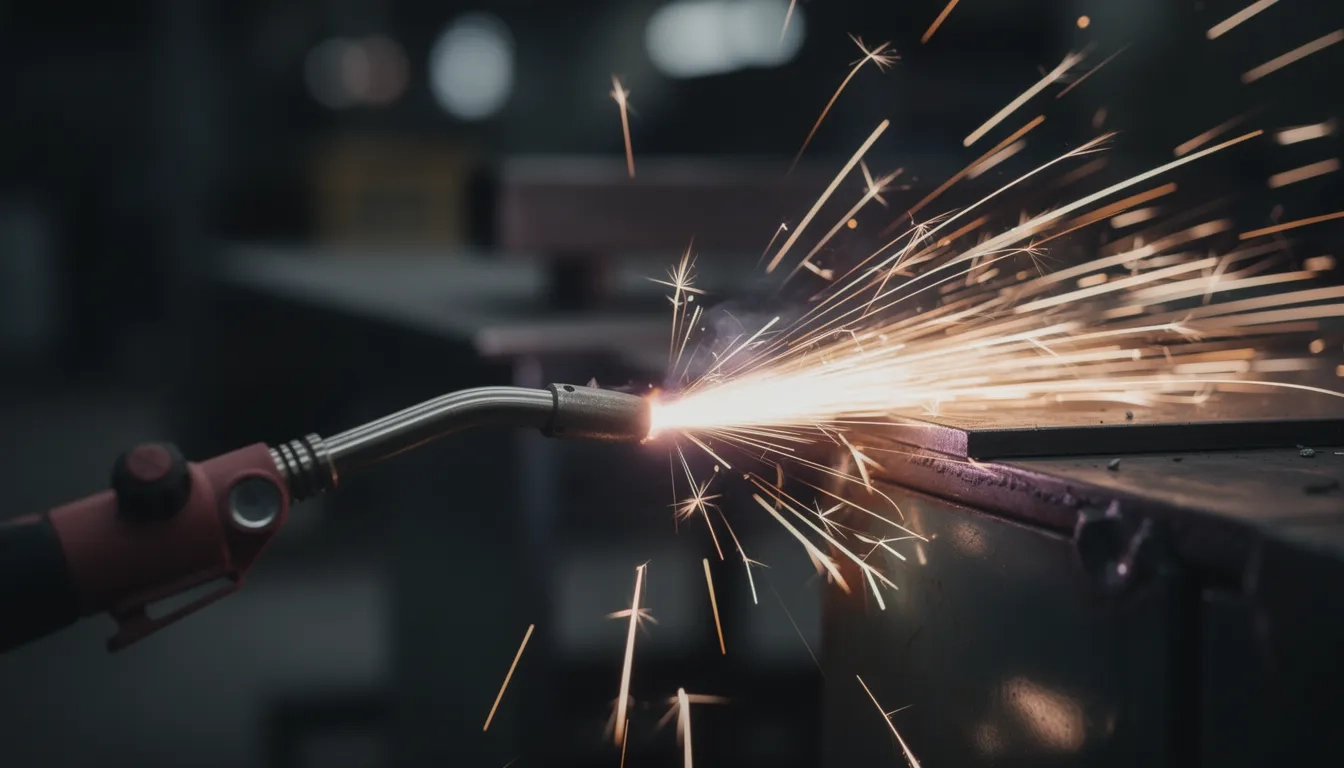
Every year, a handful of students ask the same question at trade school open houses: "Isn't welding dying out because of robots?" It's a fair question — and the wrong one. The real story in 2026 isn't automation replacing welders, it's the opposite problem: not enough people are entering the trade fast enough to replace the ones retiring. If you're considering welding as a career, the practical questions that actually matter are how long training takes, what it costs, which certifications employers actually check for, and what the job really pays. Here's what the data says.
The Real Path to Becoming a Welder
There isn't one single route into welding — there are three, and which one makes sense depends on your timeline, budget, and how fast you want to start earning.
Option 1: Welding Certificate Programs (Fastest)
Certificate programs are the most common entry point. They're offered through community colleges, technical colleges, and private trade schools, and they typically run anywhere from a few months to about a year, focusing almost entirely on hands-on welding skill rather than general education requirements. Certificate programs usually cover 20 to 45 credit hours, compared to the 60-plus credit hours in an associate degree, which is why they move so much faster.
In these programs you'll typically learn shielded metal arc welding (SMAW, or "stick"), gas metal arc welding (GMAW, or "MIG"), gas tungsten arc welding (GTAW, or "TIG"), and flux-cored arc welding (FCAW), along with blueprint reading, metallurgy basics, and shop safety.
Option 2: Associate Degree Programs (More Comprehensive)
An associate degree in welding technology generally takes about two years and layers general education courses (math, communication, sometimes business basics) on top of the same welding skill-building. This route makes sense if you want to eventually move into welding inspection, supervision, quality control, or engineering-adjacent roles where an associate degree carries more weight with employers — or if you might want to transfer credits later.
Option 3: On-the-Job Training / Apprenticeship
According to the U.S. Bureau of Labor Statistics, the typical entry-level education for this field is a high school diploma or equivalent, combined with moderate-term on-the-job training. Some welders still get hired as entry-level helpers or through union and employer apprenticeships and learn directly on the shop floor, especially in manufacturing, which accounts for the majority of welding jobs. This path costs the least up front but usually pays less starting out and can take longer to reach full proficiency across multiple welding processes.
Most people entering the trade in 2026 do a hybrid: a short certificate or SENSE-based program to get foundational certifications, then continue building process-specific skills on the job.
AWS Certifications: Why They Actually Matter
Finishing a training program is not the same as being "certified" in the way employers mean it. The American Welding Society (AWS) is the body that issues the credentials employers actually check, and there are a few distinct things to know here so you don't confuse them.
AWS SENSE (Schools Excelling through National Skill Standards Education) is a training-program accreditation, not a personal certification you carry with you. It's a national curriculum standard that schools can adopt — Level I (Entry Welder), Level II (Advanced Welder), and Level III (Expert Welder) — so that a "SENSE Level I" graduate from one accredited school has demonstrably met the same skill and knowledge standard as one from another. If a program advertises AWS SENSE accreditation, that's a real signal of curriculum quality.
The AWS Certified Welder (CW) program is different — it's a hands-on performance test you personally take and pass, tied to a specific welding process, position, and material thickness (for example, a 3G/4G SMAW combination on carbon steel plate). Notably, there are no educational prerequisites for this credential — you can qualify whether you learned through a welding school, an apprenticeship, the military, or on the job, as long as you pass the practical test. This is usually the certification employers mean when a job posting says "must be AWS certified."
The Certified Welding Inspector (CWI) credential is a career-ladder move, not an entry-level goal. It generally requires several years of documented welding experience and involves a three-part exam (a written fundamentals test, a hands-on inspection practical, and a code-specific open-book test, often based on AWS D1.1 structural welding code or API 1104 for pipelines). It's worth knowing about early because it's the natural next step once you have field experience and want to move from welding to inspecting other people's welds — often for meaningfully higher pay.
Which Process Certification Do Employers Actually Ask For?
This varies a lot by industry, and it's worth tailoring your training toward the sector you want:
- Construction and structural work commonly test for 3G/4G MIG combination welds, often alongside stick or flux-cored qualifications.
- Shipyards frequently test stick (SMAW) welders in 3G/4G combination positions.
- Pipeline and power-plant work often requires 6G pipe position tests, sometimes combining a TIG root pass with a stick fill and cap.
- General fabrication shops lean heavily on SMAW — many employers simply won't consider a candidate without a stick welding certification, since it's treated as the trade's baseline skill.
The practical takeaway: don't just get "a" welding certification — find out what process and position your target industry tests for, and make sure your training program actually prepares you for that specific test.
What Welders Actually Earn in 2026
According to the Bureau of Labor Statistics, the median annual wage for welders, cutters, solderers, and brazers was $53,750 in May 2025 (about $25.84 an hour). The bottom 10% of earners made less than $39,240, while the top 10% made more than $77,530 — and that top bracket is where specialization starts to matter a lot.
On job outlook, the BLS projects 2% employment growth from 2025 to 2035, which is described as slower than the average for all occupations — but that headline number is misleading on its own. Because so much of the current workforce is aging out, the BLS still projects about 40,300 job openings per year on average over the decade, with most of those openings coming from the need to replace retiring workers rather than net-new job creation. There were roughly 437,700 welding jobs in the U.S. as of 2025, concentrated heavily in manufacturing (63% of employment) and specialty trade contracting (8%).
Specialized Welding Pays a Lot More
General welding wages are solid but not spectacular. Where the money gets serious is in high-risk or highly technical specialties:
- Underwater welding: average earnings around $100,000 a year, with a realistic range of roughly $40,000 to $200,000+ depending on dive depth, offshore risk, and experience. Employers often pay a 25–50% premium for hazardous offshore conditions.
- Pipeline welding: entry-level pay in the $40,000–$60,000 range, climbing to $90,000–$150,000+ for experienced pipeline welders, especially on cross-country or offshore pipeline projects.
- Aerospace welding: typically $60,000–$100,000+, with top aerospace and defense contractors (shipbuilders, spacecraft and aircraft manufacturers) paying well above general manufacturing rates for precision welding on tight tolerances and exotic alloys.
The pattern across all of these: the harder the environment, the more precise the tolerance, and the higher the safety stakes, the more a certified specialist earns.
Real Program Costs: A Comparison
Cost is where community colleges and private trade schools diverge sharply. Here's what actual programs charge, based on their own published tuition figures:
| Program | Type | Length | Cost |
|---|---|---|---|
| Dallas College SMAW Certificate | Community college | 8 months | ~$1,584 (in-county tuition) |
| Alvin Community College Welding Certificate 1 | Community college | ~1 year | ~$1,986 in-district / ~$3,159 out-of-district (plus ~$1,600 tool kit) |
| Lincoln Tech Welding Technology | Private trade school | 7–10 months | ~$18,000–$23,000 |
| Tulsa Welding School Welding Specialist | Private trade school | 7 months | ~$24,175 (tuition, lab fees, gear, books, insurance, tech fees) |
| Tulsa Welding School Specialist + Pipefitting | Private trade school | ~9.5 months | ~$29,656 |
The gap is dramatic — community college programs can run under $3,000 for a comparable certificate, while private trade schools charge $18,000–$30,000 for programs of similar or even shorter length. The private schools generally bundle in equipment, gear, and job-placement services that community colleges leave for students to cover separately, and they may also offer more flexible start dates and faster completion. Pell Grants, which provide up to $7,595 per year for the 2025–2026 award year and don't need to be repaid, can cover the full cost of many community college welding certificates outright — which is worth checking before assuming a private academy is the only fast option.
The Common Misconception: "Welding Is a Dying Trade"
This is probably the single biggest myth keeping capable people out of a trade that badly needs them. The reasoning usually goes: robots can weld now, so human welders are being phased out. The data doesn't support that conclusion.
Automated and robotic welding genuinely has taken over a slice of the work — specifically the repetitive, identical welds performed thousands of times on a fixed manufacturing line, where the same joint geometry repeats endlessly. That's real, and it's not going away. But most welding in the real world doesn't look like that. Construction sites, shipyards, pipeline right-of-ways, repair shops, and custom fabrication jobs involve constantly changing conditions, awkward positions, and joint variations that require human judgment — the kind of adaptive problem-solving robots still can't replicate cost-effectively at scale.
Meanwhile, the workforce math points toward a shortage, not a surplus. The American Welding Society put the U.S. welding workforce at roughly 771,000 professionals in 2024, noted that more than 157,000 welders are approaching retirement age, and projected that 320,500 new welders will be needed by 2029 just to meet demand. That's a large, aging workforce with a wave of retirements coming and not enough new entrants lined up to replace them — the opposite of a dying trade.
The more accurate way to think about automation in welding is that it's changing what welders do, not eliminating the need for them. Increasingly, experienced welders move into robot programming, weld quality inspection, and process oversight roles that pay more than manual welding alone — automation is creating a career ladder, not removing the bottom rung.
How to Actually Choose a Welding Program
A few practical filters cut through most of the marketing noise:
- Check for AWS SENSE accreditation. It's not required, but it signals the school follows a nationally recognized skill and safety curriculum rather than an ad hoc one.
- Ask what certification tests are built into the program. A good program doesn't just teach welding — it prepares you for a specific AWS Certified Welder test (process, position, and material) tied to real job postings in your area.
- Compare total cost, not just tuition. Tool kits, PPE, materials fees, and lab fees can add thousands on top of sticker-price tuition — get the full breakdown before enrolling, especially at community colleges where these costs are often unbundled.
- Look at job placement data and industry partnerships. Programs connected to local manufacturers, shipyards, or pipeline contractors tend to place graduates faster because the curriculum is built around what those employers actually test for.
- Consider your target industry before you enroll. If you know you want pipeline work, prioritize a program with strong pipe/6G training; if you want structural or shipyard work, prioritize stick and combination MIG training.
- Don't skip the math on financial aid. Between Pell Grants and state workforce grants, many community college welding certificates can be nearly free — verify eligibility before assuming a $20,000+ private program is your only option.
Getting AWS Certified: The Practical Steps
- Complete a training program (certificate, associate degree, or apprenticeship-based training) that covers the process and position you're targeting.
- Identify the specific AWS Certified Welder test your target employer or industry requires (for example, SMAW 3G/4G on carbon steel, or GTAW 6G pipe).
- Schedule and pass the practical performance test — many schools with AWS-accredited testing facilities can administer this on-site.
- Keep your certification current. AWS welder certifications require periodic renewal and proof of continued welding activity in the qualified process — lapse too long without documented work and you may need to retest.
- As you gain years of experience, consider stacking additional process certifications (MIG, TIG, stick, pipe) since multi-process certified welders are more employable and typically earn more than single-process welders.
- If you're aiming for inspection or supervisory roles down the line, start tracking your documented field experience early — it's a prerequisite for the CWI exam later.
FAQ
How long does it take to become a welder? It depends on the path. A certificate program typically takes anywhere from a few months to about a year; an associate degree program takes about two years. On-the-job and apprenticeship routes vary more widely, since they depend on how much hands-on training you get and how many processes you need to master.
Do I need a college degree to be a welder? No. The Bureau of Labor Statistics lists a high school diploma or equivalent as the typical entry-level education, paired with moderate-term on-the-job training. A certificate or degree can speed up your progress and improve job prospects, but it isn't a strict requirement for entry-level work.
Is welding actually a good career in 2026? The wage data and demand data both support it as a solid, stable trade. Median pay was $53,750 in May 2025, roughly 40,300 openings are projected annually through 2035, and industry data from the American Welding Society points to a significant retirement wave with not enough new welders entering to replace departing workers — that's a favorable supply-demand picture for job seekers.
What's the difference between MIG, TIG, stick, and flux-core welding? MIG (GMAW) uses a continuously fed wire electrode and is relatively fast to learn, often used in manufacturing and auto work. TIG (GTAW) uses a non-consumable tungsten electrode for precise, clean welds and is common in aerospace, piping, and thin-material work. Stick (SMAW) uses a consumable flux-coated electrode and is prized for its versatility outdoors and on dirty or rusty material — it's also the process most commonly required as a baseline certification. Flux-cored (FCAW) is similar to MIG but uses a tubular wire with flux inside, offering deeper penetration for thicker materials and outdoor work.
Can welding really pay six figures? Yes, but generally not in general manufacturing welding — it comes from specialization. Underwater welders average around $100,000 a year (with a wide range depending on offshore risk and depth), experienced pipeline welders can earn $90,000–$150,000+, and aerospace/defense welders working for major contractors often exceed $100,000 as well. These roles typically require additional certifications, more experience, and often relocation or travel.
Should I choose a community college or a private trade school? Cost is the biggest differentiator — community college certificate programs can run under $3,000 in tuition, while private trade schools often charge $18,000–$30,000 for programs of similar or shorter length. Private schools tend to bundle equipment and job placement services and may offer faster, more flexible schedules; community colleges tend to be dramatically cheaper, especially when combined with Pell Grant funding, but may require more self-directed effort around tools and job placement.
Sources
- Welders, Cutters, Solderers, and Brazers - Occupational Outlook Handbook, U.S. Bureau of Labor Statistics
- Where Are the Welders? - Welding Digest, American Welding Society (October 2025)
- Professional Welding Certifications - American Welding Society
- SENSE - School for Excellence in Welding Education - American Welding Society
- Certified Welder Program - American Welding Society
- Welding Technology Program - Alvin Community College
- Welding Program - Dallas College
- Tulsa Welding School Costs: Tuition and Fees
- Welder Salary Guide - Lincoln Tech
- Highest Paying Welding Specialties in 2026 - Western Welding Academy

