How to Become an HVAC Technician
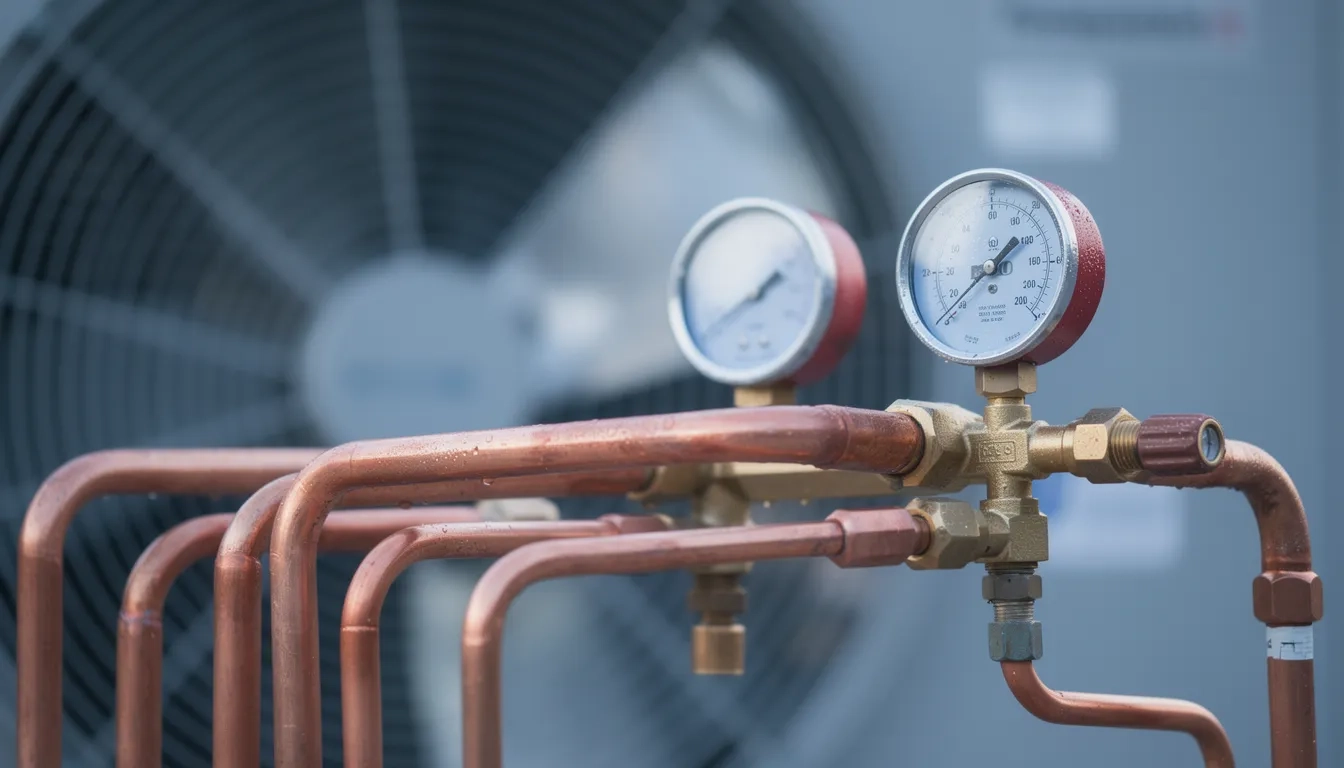
Every time a furnace dies in January or a compressor gives out in July, somebody has to show up and fix it. That's not a trend that's going away, and it's a big part of why HVAC has quietly become one of the more dependable skilled trades to get into right now. But the path into it isn't as simple as "take a class, get a job." There's a real certification you're legally required to have before you can touch refrigerant, licensing rules that change depending on which city you live in, and a decision to make between school-based training and an apprenticeship that pays you while you learn.
Here's what the process actually looks like, with real numbers instead of vague promises.
What an HVAC Technician Actually Does
The biggest misconception about this job is right there in the name people use for it — "AC repair guy." In reality, HVAC stands for heating, ventilation, and air conditioning, and a working technician is expected to handle all three, plus refrigeration in many cases (that's why you'll often see the field written as HVAC/R). A single day might include diagnosing a gas furnace ignition problem in the morning, servicing a commercial rooftop unit at lunch, and troubleshooting a smart thermostat or a variable-speed heat pump by evening.
That last part matters more every year. The industry is in the middle of a genuine technology shift: manufacturers stopped producing new R-410A systems as of January 1, 2025, and installation of new R-410A equipment was cut off January 1, 2026, as part of the EPA's refrigerant phasedown under the AIM Act. The replacement refrigerants — R-454B and R-32 — are mildly flammable (classified A2L), which means newer systems require different handling, leak-detection, and safety procedures than older equipment. On top of that, heat pumps are projected to account for roughly 35–45% of new HVAC installations in 2026, up sharply from around 20% a few years ago, according to industry trend reporting. A tech trained only on "how to fix an AC" from a decade ago would be lost on a modern job site. This is now an electronics-and-refrigeration-chemistry trade as much as a wrench-and-duct trade.
Step 1: Get Some Formal Training (6 Months to 2 Years)
You can technically enter HVAC through a pure apprenticeship with no classroom time (more on that below), but the vast majority of new technicians start with a certificate or associate degree program at a trade school or community college. The Bureau of Labor Statistics lists "postsecondary nondegree award" as the typical entry-level education for the occupation, meaning most employers expect at least a certificate, even if it's not legally mandatory everywhere.
Program length and cost vary a lot depending on the credential and the school:
- Certificate programs generally run 6 months to about a year and focus on core competency: electrical fundamentals, refrigeration cycles, sheet metal work, and safety.
- Associate degree programs run closer to two years (four semesters) and add more theory, business, and supervisory coursework, which can help later if you want to move into service management or start your own company.
Real examples of what this costs today:
- Refrigeration School, Inc. (RSI) in Phoenix, Arizona runs a Refrigeration Technologies program that's 600 contact hours over roughly 6–10 months. Tuition alone is listed at $18,400, and RSI's own tuition page puts the total program cost — including course materials, lab fees, a tools/gear package, technology fee, and registration — at $23,825.
- Ivy Tech Community College, a public two-year college with campuses across Indiana, offers an Associate of Applied Science in HVAC Technology that takes about four semesters (two years) to complete. Ivy Tech's standard tuition runs $178.38 per credit hour part-time or roughly $2,577 per semester full-time, which puts a full HVAC associate degree in the ballpark of $10,000 or a bit more before books and tools — well under half of what a private trade-school diploma costs.
- Lincoln Tech, a private trade school with campuses nationwide, lists HVAC/refrigeration diploma programs that typically run 10–12 months, with total program costs commonly falling in the roughly $20,000–$36,000 range depending on the specific campus and program length (Lincoln Tech publishes campus-by-campus tuition and fee schedules rather than one flat national price).
The pattern holds across the industry generally: public community college HVAC credentials tend to run $4,800–$10,000 for a full associate track, while private trade-school diplomas commonly land between $15,000 and $25,000+ for a shorter, more compressed schedule. You're mostly paying for speed and, in some cases, stronger local employer placement relationships — not necessarily better instruction.
Step 2: Get EPA Section 608 Certified (Non-Negotiable)
Regardless of which school path you take, there's one certification that isn't optional if you plan to touch refrigerant: EPA Section 608 Technician Certification, required under the Clean Air Act (40 CFR Part 82, Subpart F). Any technician who maintains, services, repairs, or disposes of equipment that could release refrigerant into the atmosphere has to hold this certification — it's federal law, not a nice-to-have.
There are four types, and which one(s) you need depends on the equipment you'll work on, not the refrigerant itself:
- Type I — small appliances with 5 pounds or less of refrigerant, fully manufactured and hermetically sealed at the factory (window AC units, refrigerators, etc.)
- Type II — high- and very-high-pressure appliances, which covers most residential and light-commercial air conditioning and heat pump systems (this is the one most residential HVAC techs need)
- Type III — low-pressure appliances, mostly large chillers used in commercial buildings
- Universal — covers all three categories above; most working HVAC/R technicians eventually earn Universal so they aren't limited on the job
To earn any Type certification you have to pass a "Core" section plus the exam for that specific Type, administered by an EPA-approved certifying organization through a closed-book, proctored test. The good news: once you pass, the certification never expires. Most trade schools and community college programs build the Core and Type I/II/III/Universal exams directly into the curriculum, and RSI's program cost above, for example, explicitly includes EPA certification in the total price. If your program doesn't include it, third-party providers offer the exam separately, often for well under $100 per attempt.
Step 3: Decide Between School-First and Apprenticeship-First
There are really two on-ramps into this career, and plenty of people combine them.
School, then entry-level job. Finish a certificate or associate program, get EPA 608 certified, and apply for helper or entry-level installer/service positions. Many employers then put you through additional in-house or manufacturer training.
Union or employer apprenticeship. Programs run through the United Association (UA) — the trade union covering plumbing, pipefitting, and HVAC/R — let you "earn while you learn." Apprentices work full-time under a licensed journeyman while attending technical classes (often two evenings a week during the academic year), and typically run around five years to reach journeyman status. Pay starts at roughly 40–50% of the full journeyman wage in year one and increases with scheduled raises each year, and many programs (through partnerships with local community colleges) let apprenticeship hours count toward an associate degree along with union health and retirement benefits. The tradeoff is time: it's a longer runway to full journeyman pay than a fast-tracked trade-school diploma, but you graduate with zero tuition debt.
Non-union employers also run their own apprenticeship-style programs, though structure and pay vary company to company, so ask directly about wage progression and whether technical coursework is included before signing on.
Step 4: Get Licensed — Which Depends Entirely on Where You Live
This is the part that surprises a lot of people: there is no single national HVAC license. Roughly a dozen states — including Colorado, Illinois, Indiana, Kansas, Maine, Missouri, New Hampshire, New York, Pennsylvania, South Dakota, Vermont, and Wyoming — have no statewide HVAC contractor license at all, leaving licensing entirely to individual cities and counties. Other states, like Florida and Texas, run centralized state licensing boards with their own exams, experience requirements, and renewal cycles.
Practically, this means you need to research the specific rules for wherever you plan to work — and if you move states, expect to look into licensing again. What's consistent everywhere, though, is that EPA 608 certification is required regardless of state or local licensing rules, since it comes from federal law rather than state regulation. A local or state contractor's license (needed mainly if you want to run your own business and pull permits) is a separate, additional requirement layered on top.
What HVAC Technicians Actually Earn
According to the U.S. Bureau of Labor Statistics' Occupational Outlook Handbook, as of May 2025:
- Median annual wage: $61,010 ($29.33/hour)
- Employment: approximately 440,900 people work in the occupation
- Projected growth (2025–2035): 11%, which BLS classifies as "much faster than average"
- Annual job openings: about 40,600 per year, driven by both growth and the need to replace workers who retire or leave the field
- Top 10% earn: more than $95,210 per year; bottom 10% earn less than $40,050
That growth rate is meaningfully faster than most occupations, and it's tied to two forces: a lot of HVAC equipment installed in the housing boom years is now aging out and needing replacement, and the shift toward heat pumps and A2L refrigerants is creating demand for technicians trained on newer systems — while some industry estimates suggest the field is already dealing with a shortage in the tens of thousands of qualified technicians. Certifications on top of your base training help you capture more of that upside: NATE-certified technicians (North American Technician Excellence, a voluntary but widely respected credential) reportedly earn up to 13% more than non-certified peers and are considerably more likely to move into lead or supervisory roles.
The Common Misconception Worth Repeating
Because it matters enough to say twice: people considering this career often picture it as "AC repair," maybe with furnace work tacked on for winter. In practice, modern HVAC techs need working knowledge of electrical systems, combustion and gas safety, refrigerant chemistry and handling regulations, ductwork and airflow design, and increasingly, smart thermostats, variable-speed compressors, and building automation controls. The refrigerant transition happening right now — away from R-410A toward mildly flammable A2L refrigerants — is a good example of how the job keeps getting more technical, not less. Choosing a program that teaches current equipment and current EPA rules, rather than an outdated curriculum, actually matters for how quickly you become employable.
How to Choose a Program
A few practical filters that matter more than a glossy brochure:
- Confirm EPA 608 prep is built in. Ask directly whether Core, Type I, Type II, Type III, and Universal exam prep and testing are included in tuition, and whether you leave with the certification in hand or have to arrange it separately afterward.
- Check accreditation and employer relationships. Programs recognized by HVAC Excellence or accredited institutions tend to have stronger ties to local employers for job placement — ask for placement rates and specific employer partners, not just a general claim.
- Compare total cost, not sticker tuition. As the examples above show, "tuition" and "total program cost" can differ by thousands of dollars once tools, lab fees, and materials are added — always ask for the all-in number.
- Ask what refrigerants and equipment you'll train on. With the R-410A-to-R-454B/R-32 transition underway, make sure the lab equipment isn't outdated.
- Weigh time against debt. A faster private diploma gets you working sooner but usually costs more; a two-year community college degree or a union apprenticeship costs less (or nothing) but takes longer to reach full pay.
Frequently Asked Questions
How long does it take to become an HVAC technician? Most people can complete a certificate program and get EPA 608 certified in 6 months to a year, though full associate degree programs run about two years and union apprenticeships to reach journeyman status typically take around five years.
Do I need a college degree to work in HVAC? No. A high school diploma or equivalent plus a postsecondary certificate is the typical entry point, per BLS. An associate degree isn't required but can help with advancement into supervisory or business-side roles.
Is EPA 608 certification the same as an HVAC license? No. EPA 608 is a federal certification specifically for handling refrigerants and is required nationwide under the Clean Air Act. A state or local HVAC contractor's license is a separate credential, and requirements for it vary enormously by state and city.
How much does HVAC school cost? It ranges widely — roughly $4,800–$10,000 for a full two-year community college associate degree, versus roughly $15,000–$25,000+ for a private trade-school diploma of 6–12 months, based on published tuition from schools like Ivy Tech, RSI, and Lincoln Tech.
Is HVAC a good career in 2026? The data supports it: BLS projects 11% job growth from 2025–2035 (much faster than average) with about 40,600 openings a year and a median wage over $61,000, driven partly by an aging installed base of equipment and the ongoing shift to heat pumps and new refrigerants.
What's the difference between Type I, II, III, and Universal EPA certification? Type I covers small sealed appliances (5 lbs of refrigerant or less), Type II covers high-pressure equipment like most residential/light-commercial AC and heat pump systems, Type III covers low-pressure equipment like large commercial chillers, and Universal covers all three — most full-time residential/commercial techs eventually earn Universal.
Sources
- Heating, Air Conditioning, and Refrigeration Mechanics and Installers - U.S. Bureau of Labor Statistics
- Section 608 Technician Certification | US EPA
- Certification Programs for Section 608 Technicians | US EPA
- Tuition & Schedule of HVAC and Refrigeration Classes | Refrigeration School, Inc. (RSI)
- Heating, Ventilation, & Air Conditioning Technology (HVAC) - Ivy Tech Community College
- What is the EPA 608 Certification? A Detailed Guide - Lincoln Tech
- UA Apprenticeship | United Association
- HVAC License Requirements by State | FieldPulse
- How NATE Certification Can Boost Your HVAC Career - NATE
- EPA Finalizes Refrigerant Rule Update to Allow Older HVAC Unit Installation | NAHB
- Lincoln Tech Program Tuition & Fees by Campus (PDF)

