Top Trade Schools in Alabama 2026
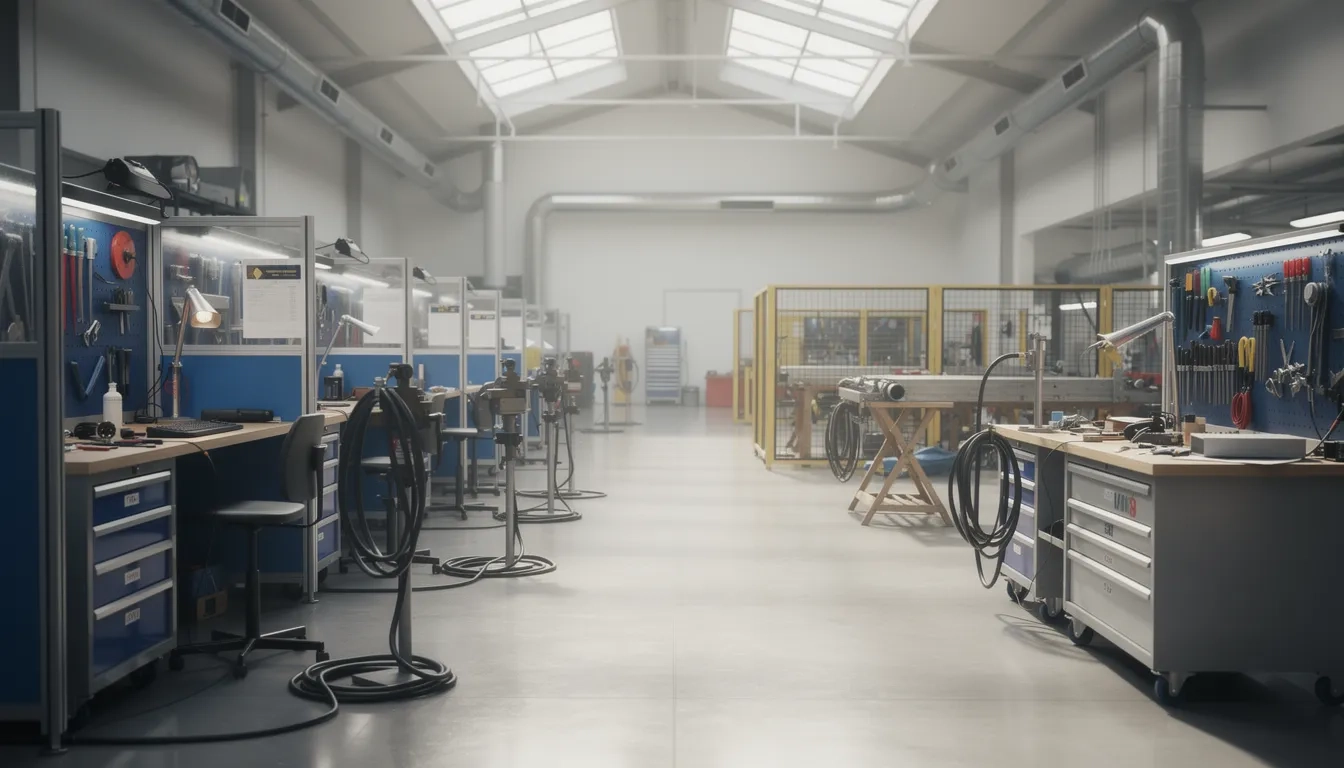
Alabama's trade school scene doesn't get the attention four-year universities do, but for anyone weighing a welding certificate against a philosophy degree, it's worth a much closer look. Between a state-run community college system that keeps tuition under $6,000 a year and a handful of accredited private schools filling specific gaps (aviation maintenance, HVAC diplomas, cosmetology), Alabama actually has a decent bench of legitimate options for 2026 — you just have to know which ones are which.
This guide walks through real, currently operating Alabama trade programs, what they cost, how long they take, and — maybe more usefully — how to tell a solid program from one that's just good at marketing.
Why Alabama trade schools are worth a serious look in 2026
Alabama's Community College System (ACCS) runs career-technical education (CTE) programs at nearly every one of its two-year colleges, and tuition at these public schools is dramatically lower than at private, for-profit trade schools offering the same certificate. A welding certificate at a public Alabama community college can run a few thousand dollars total; the same credential at a private career college can run several times that.
At the same time, wages for skilled trades in Alabama are solid relative to cost of living. National Bureau of Labor Statistics data from 2025 puts the mean annual wage for welders at $56,760 and for HVAC mechanics and installers at $68,120 nationally, while electricians nationally average $71,490 with a median hourly wage of $34.37. Alabama-specific figures run a bit under the national mean — electricians in Alabama average in the mid-$50,000s, and HVAC technicians in the state average around $53,700 — but that's still a strong return on a one- or two-year, low-debt credential, especially compared to the average student loan burden of a four-year degree.
Real Alabama trade schools and programs to know
J.F. Ingram State Technical College — Deatsville
Ingram State is a public two-year technical college under the ACCS umbrella, offering career-oriented certificate and short-term certification programs across 17 fields. Its most relevant programs for this list are HVAC and Refrigeration Engineering Technology, Welding, Electrician training, and a 60-semester-hour Automotive Mechanics program built around entry-level workforce skills. Estimated tuition and fees for 2026 run around $6,084 for the year, and the school reports that 100% of enrolled students receive some form of grant or scholarship aid, averaging around $3,875 per student.
Lawson State Community College — Birmingham
Lawson State's career-technical division covers HVAC/air conditioning and refrigeration, automotive technology, and welding, with the welding program covering arc welding (manual, semi-automatic, and automated), pipe welding and pipefitting, blueprint reading, and welding inspection. Per the college's own 2024–25 tuition and fee schedule, tuition runs $129–$131 per semester credit hour, landing around $168 per credit hour once mandatory fees are included — meaning a one-year certificate is very achievable for a few thousand dollars.
Bevill State Community College — Jasper
Bevill State's Welding Technology program is a one- to two-year postsecondary certificate track covering blueprint reading, fabrication, and welding inspection and testing, with the option for students to sit for AWS (American Welding Society) certification on completion. Annual tuition and fees run about $4,678 for in-state students and $8,234 for out-of-state students.
Wallace State Community College — Hanceville
Wallace State runs one of the more comprehensive CTE catalogs in the system, with Welding, Electrical Technology, HVAC & Refrigeration, and Advanced Automotive Technology programs all leading to certificates or associate degrees. In-state tuition is listed at roughly $111 per credit hour, with total annual costs (before aid) landing near $4,980 and an average net price closer to $12,710 once you factor in the roughly 30% of students who don't receive aid.
Shelton State Community College — Tuscaloosa
Shelton State's technical division includes Welding & Fabrication, Automotive Technology, HVAC/R, and Construction & Carpentry. Its HVAC students can earn NATE and ICE industry certifications alongside their coursework. Total tuition and fees for in-state students run about $5,127 for the current year, with a projected 2026 rate near $5,188 (versus roughly $9,119 out-of-state).
H. Councill Trenholm State Community College — Montgomery
Trenholm State, a historically Black community college, pairs a Cosmetology program with a Welding program built around six distinct welding and cutting processes, pipe welding, brazing, and blueprint reading. In-state tuition and fees run around $5,190 a year (about $9,060 out-of-state), and roughly 81% of enrolled students receive grant or scholarship aid.
Bishop State Community College — Mobile
Bishop State offers Welding, HVAC and Refrigeration Engineering Technology, Automotive Mechanics, and Cosmetology. In-state students pay roughly $4,000 a year total, with the welding program running close to $2,500 per semester for a full course load — again, dramatically below what a private career college charges for a comparable certificate.
Alabama Aviation programs — Coastal Alabama Community College & Enterprise State/Alabama Aviation College
Alabama's aviation maintenance training runs through the ACCS, primarily via the Alabama Aviation Center at Coastal Alabama Community College's Mobile Aeroplex at Brookley Field campus, plus the historic Alabama Aviation College campuses in Ozark and Andalusia. Coastal Alabama's Airframe Technology program comes in both a four-semester Associate in Applied Science track and a three-semester certificate track, both built to prepare students for the FAA written, oral, and practical exams required for Aviation Maintenance Technician certification, alongside Powerplant Technology coursework covering engines, hydraulics, and avionics systems. High schoolers can even get a head start through dual-enrollment partnerships with Enterprise State Community College. These programs are consistently cited as offering some of the lowest-cost accredited aviation maintenance training in the country.
Fortis College — Montgomery, Birmingham, Dothan, and Mobile
For students who want a private, career-focused diploma path rather than a community college associate degree, Fortis operates multiple Alabama campuses offering HVAC training (and other trade diplomas depending on campus). Fortis College is institutionally accredited through the Accrediting Bureau of Health Education Schools (ABHES), licensed through the Private School Licensure Division of the Alabama Community College System, and approved to train veterans through the Alabama State Approving Agency — three separate oversight layers worth checking for any private trade school you're considering.
Cosmetology-specific training — Paul Mitchell and independent beauty schools
Cosmetology sits a little apart from the industrial trades because it's licensed through the Alabama Board of Cosmetology rather than the Department of Labor. Paul Mitchell operates cosmetology and beauty school locations in Alabama, and several ACCS community colleges (Trenholm State and Bishop State among them) run their own in-house Cosmetology programs at community-college tuition rates rather than private-school tuition. Before enrolling anywhere for cosmetology, confirm the school's students are eligible to sit Alabama's licensing exams — the state currently charges $75 for the written exam and $130 for the practical exam, per the Alabama Board of Cosmetology's own fee schedule.
How to tell if a trade school is actually legitimate
This is the part most "top trade schools" listicles skip, and it's the part that actually protects your money.
Check institutional accreditation first. Alabama's public community colleges are accredited through SACSCOC (the Southern Association of Colleges and Schools Commission on Colleges), the same regional accreditor that covers four-year universities across the Southeast — you can verify any specific college's status directly on SACSCOC's institution list. Private career schools use different accreditors (Fortis, for example, uses ABHES), and Alabama additionally requires private trade and career schools to be licensed through the Private School Licensure Division of the ACCS. If a school can't point you to both a recognized accreditor and, for private schools, state licensure, that's a hard stop.
Check for program-specific certification, not just institutional accreditation. Institutional accreditation tells you the school itself is a legitimate entity. It doesn't tell you whether the welding program will actually get you AWS-certified, whether the automotive program is NATEF-recognized, whether the HVAC program preps you for NATE or EPA 608 certification, or whether the aviation program's graduates are actually passing FAA exams. Ask the program directly what certification exams its curriculum is built around, and ask what percentage of recent graduates passed on the first attempt.
Ask for job placement numbers in writing — and be skeptical of round numbers. Federal "gainful employment" rules require career-training programs that accept federal student aid to disclose debt-to-earnings outcomes, and placement rate is calculated as the share of graduates gainfully employed in their field within six months of finishing. A legitimate program will hand you this data, sourced and dated, without hedging. Industry-wide, roughly 70% of trade school graduates land a job within six months of completing training — a school claiming something dramatically higher with no methodology behind it deserves a follow-up question, not blind trust.
Compare the true cost, not the sticker price. A one-year certificate at a public ACCS college can cost $4,000–$6,000 total. A comparable diploma at a private for-profit school can run several times that for the same content. That gap isn't automatically a red flag — private schools sometimes offer faster schedules, more flexible start dates, or equipment access a community college doesn't have — but you should be able to name specifically what you're paying extra for.
The common misconception: "a trade school is a trade school"
The single biggest mistake people make when researching Alabama trade schools is treating "trade school" as one uniform category, as if a certificate from any of them carries equal weight. It doesn't.
There's a real, structural difference between a career-technical program run inside a public community college — which is nonprofit, regionally accredited, priced at public tuition rates, and subject to state oversight through the ACCS — and a private, for-profit trade school, which may be perfectly legitimate but operates under a completely different accreditation body, cost structure, and (often) admissions sales process. Neither category is automatically "better." A private school might genuinely offer superior equipment or a faster schedule for a specific trade. But a lot of aggressive-marketing for-profit programs lean on borrowed credibility — vague claims of "certification," stock photos of job sites, testimonials with no names attached — while charging two or three times what the ACCS charges for the same underlying skill set.
The fix is simple but people skip it constantly: look up the specific accreditor by name, verify it's a real recognized body (not something the school invented), and compare the total cost against the nearest ACCS equivalent before you sign anything.
Practical guidance for choosing a trade school in Alabama
Start with what the trade actually pays in Alabama, not nationally. Electrical and HVAC work in Alabama pays somewhat below national averages, while demand remains steady — factor that into how much debt makes sense for your program.
Visit the actual training floor before enrolling. A welding program's real value is in its equipment and instructor-to-student ratio on the shop floor, not its brochure. If a school won't let you tour the lab or shop before enrollment, that's worth noting.
Ask about schedule flexibility if you're working while you train. Several ACCS colleges — Wallace State and Shelton State among them — structure their electrical and HVAC tracks across multiple consecutive semesters with a mix of classroom and on-the-job components, which matters if you're balancing a current job.
Check for dual-enrollment or apprenticeship pipelines if you're still in high school. Enterprise State Community College's aviation dual-enrollment arrangement with Alabama Aviation programs is a good example of a low-cost way to get a jump start before graduating high school.
Don't ignore the state licensing board for regulated trades. Cosmetology, and to a lesser extent electrical work, involve state licensing exams administered outside the school itself. Confirm directly with the Alabama Board of Cosmetology (for cosmetology) or the relevant state board that the program you're considering actually qualifies you to sit for the exam — don't take the school's word alone.
FAQ
Are Alabama community college trade programs actually accredited? Yes. Alabama's public two-year colleges — including Ingram State, Lawson State, Bevill State, Wallace State, Shelton State, Trenholm State, Bishop State, and Coastal Alabama — hold institutional accreditation through SACSCOC, the regional accreditor also used by four-year universities across the Southeast. Individual programs (welding, HVAC, automotive) often carry additional industry-recognized certifications like AWS or NATE on top of that institutional accreditation.
How much does a welding certificate cost in Alabama? At public ACCS colleges, expect roughly $4,000–$6,500 total for a one- to two-year welding certificate, depending on the college and whether you're in-state. Bevill State, for example, lists annual in-state tuition and fees around $4,678, and Bishop State's welding program runs close to $2,500 per semester.
Is it worth paying more for a private trade school over a community college program? Sometimes, but only if you can point to something specific the private school offers that the community college doesn't — faster scheduling, particular equipment, or a niche specialty. For general trades like welding, HVAC, and automotive, Alabama's ACCS colleges offer the same or comparable certification pathways at a fraction of private-school tuition.
Can I train for an aviation maintenance career in Alabama without paying university-level tuition? Yes. Coastal Alabama Community College's Alabama Aviation Center at Brookley Field and the historic Alabama Aviation College campuses in Ozark and Andalusia offer FAA-exam-focused Airframe and Powerplant training as part of the ACCS system, at public community college tuition rates — well below what private aviation academies typically charge.
How do I check if a trade school's job placement claims are real? Ask the school for its most recent placement rate in writing, along with the methodology and time period it covers (typically "employed in field within six months of completion" for federally regulated gainful-employment disclosures). Cross-check that against third-party sources like College Scorecard where available, and be wary of any placement number given verbally without paperwork behind it.
What's the difference between a "certificate" and an "associate degree" trade program in Alabama? A certificate program (often one year or less) focuses narrowly on job-ready technical skills — most Alabama welding and short HVAC tracks fall here. An Associate in Applied Science (AAS) degree, like Coastal Alabama's four-semester Airframe Technology track, takes longer but adds general education credits and typically carries more weight for supervisory or licensing-exam pathways down the line.
Sources
- J.F. Ingram State Technical College
- J.F. Ingram State Technical College Profile — Community College Review
- Lawson State Community College Tuition and Fee Schedule 2024-25
- Air Conditioning & Refrigeration — Lawson State Community College
- Welding Technology — Bevill State Community College
- Tuition & Fees — Bevill State Community College
- Programs — Wallace State Community College Catalog
- Wallace State Community College Tuition and Costs — BigFuture
- Shelton State Community College — US News Education
- Welding — Trenholm State Community College Catalog
- Career Pathways — H. Councill Trenholm State Community College
- Welding Technology — Bishop State Community College
- Airframe Technology (AAS-AMT) — Coastal Alabama Community College
- Alabama Aviation Center — Coastal Alabama Community College
- Aviation — Alabama Community College System
- Fortis Colleges & Institutes — Montgomery, AL Campus
- HVAC School in Montgomery, Alabama — Fortis
- Exam Requirements & Fees — Alabama Board of Cosmetology
- FAQs — Alabama Board of Cosmetology
- Institutions — SACSCOC
- Accreditation — Gadsden State Community College Catalog
- BLS 2025 OEWS Release — Key Numbers for Every Major Trade
- Alabama Electrician Salary & Job Outlook (2025-2026) — ExpertCE
- HVAC Technician Salary Guide for 2026, State-by-State — ServiceTitan
- Do Trade Schools Improve Job Placement Success — Tidewater Tech
- Cosmetology & Beauty Schools in Alabama — Paul Mitchell

